Roof problems
Emergency Roof Repair
Emergency roof repair starts with stopping the water, when the roof is open and it is going to rain again.
Emergency roof repair usually begins with a tarp, because the first job is to stop the water, not to match the shingles.
A hole in the roof is a different kind of problem from an ordinary leak. A tree limb through the decking, a section of shingles stripped to the boards, or a ridge torn open means the house takes water with every shower, and in Houston the next shower is never far away. The job in the first day is not to fix the roof. It is to cover it.
A proper emergency tarp is fastened with battens over the ridge, not weighed down with bricks, so the next gust does not take it with it. It buys weeks, which is usually what you need to get an adjuster out, get an estimate written and get materials ordered. It is also the point at which you want the damage photographed, because once the tarp is on, nobody can see what was underneath it.
Do not go up there yourself, the same advice that applies to a roof leaking right now. A wet roof with loose shingles on it is more dangerous than the hole. Describe what you can see from the ground, send a photo if you have one, and let somebody with the gear deal with it.
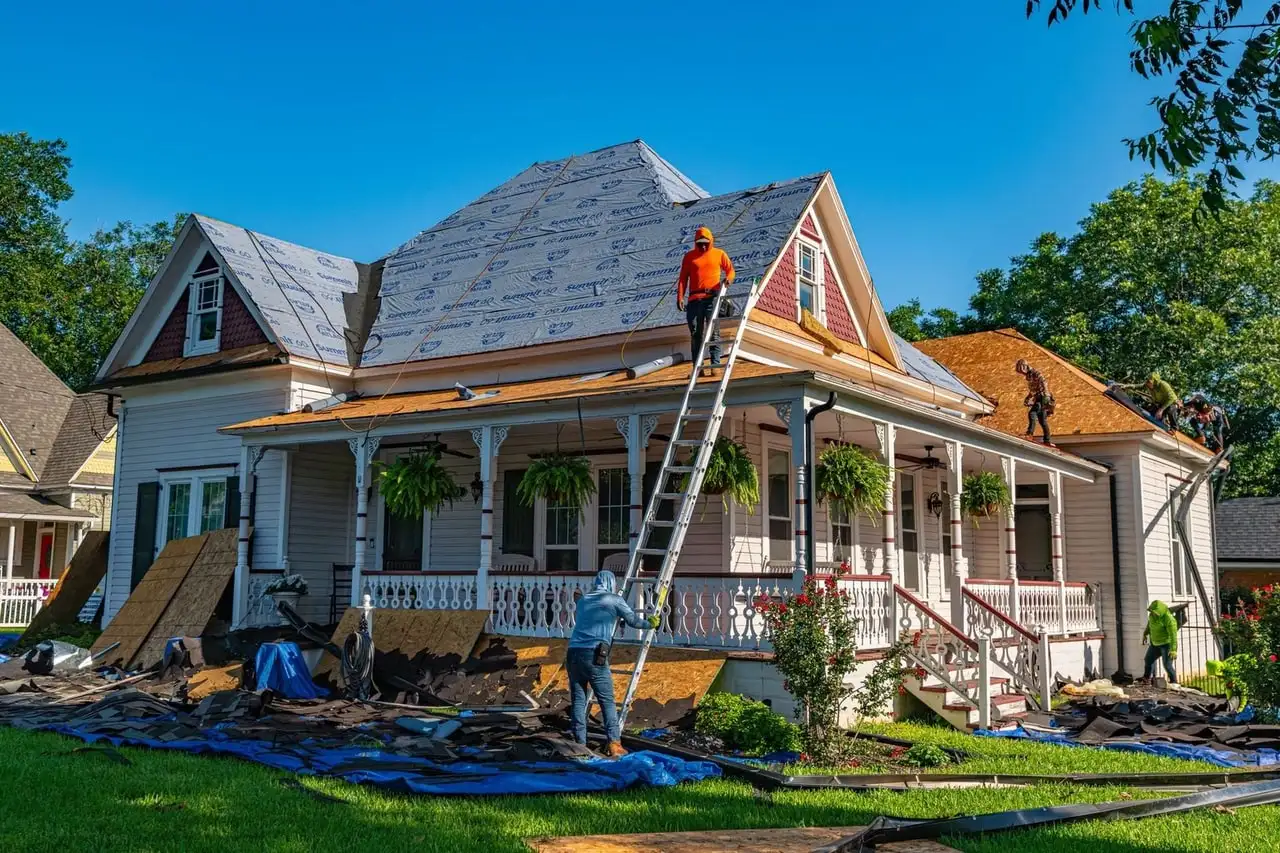
A proper emergency tarp is a small construction job. The contractor clears debris from the opening, then lays heavy tarp over the damaged area and well beyond it, running it over the ridge where possible so water has no way underneath at the top. It is secured with lumber battens screwed through the tarp into the roof framing, not with nails alone, and the edges are folded so wind cannot get under them. Where a limb has come through, the opening may be covered with a board first. Done properly, a tarp keeps the house dry through repeated rain and wind for weeks.
A tarp is a delay, not a repair, and it carries its own risks. Screw holes through shingles will need dealing with when the tarp comes off, a tarp left on for months lets moisture and heat build underneath, and a tarp that is not properly secured can tear away and take more shingles with it. Use the time it buys to get the insurance adjuster out, to document the damage, to get a written estimate and to order materials. Ask the contractor how long he expects the tarp to hold, what he will do about the screw holes and who removes the tarp when the permanent repair begins.
Safety comes before everything else here. Do not climb onto a wet roof to cover a hole yourself; keep people and belongings out from under the damaged area and catch the water inside. Photograph the damage, then ring for a tarp. The professional crew has fall protection and the fixings that hold, and the cost of the call is small beside a fall or a second storm.
What it looks like
- A limb through the roof or sitting on a broken section
- Bare decking visible from the ground
- Water coming in during rain, not just a stain afterwards
- A section of ridge or a vent torn off
Whatever the problem turns out to be, the first step is the same: describe it, say where the house is, and get matched with an independent roofing contractor working in your town. No charge for being matched, and no obligation once you are.
Where
Emergency Roof Tarping across north Houston
Emergency Roof Tarping in Humble
Emergency Roof Tarping in Kingwood
Emergency Roof Tarping in Porter
Emergency Roof Tarping in New Caney
Emergency Roof Tarping in Splendora
Emergency Roof Tarping in Crosby
Emergency Roof Tarping in Dayton
Emergency Roof Tarping in The Woodlands
Emergency Roof Tarping in Spring
Emergency Roof Tarping in Atascocita
Emergency Roof Tarping in Conroe
Emergency Roof Tarping in Tomball
Related
Get matched
Tell us what the roof is doing
Tell us what's going on and get matched with an independent roofing contractor working in your town. Free, no obligation.

Roof problem in north Houston?
Tell us what is going on and where the house is, and get matched with an independent roofing contractor in your town. No obligation.
Call (346) 576-5816