Spring, TX 77373
Roof Decking and Fascia Repair in Spring
Soft decking on a Spring roof is usually the result of a leak at an old boot or flashing that ran for longer than anyone noticed.
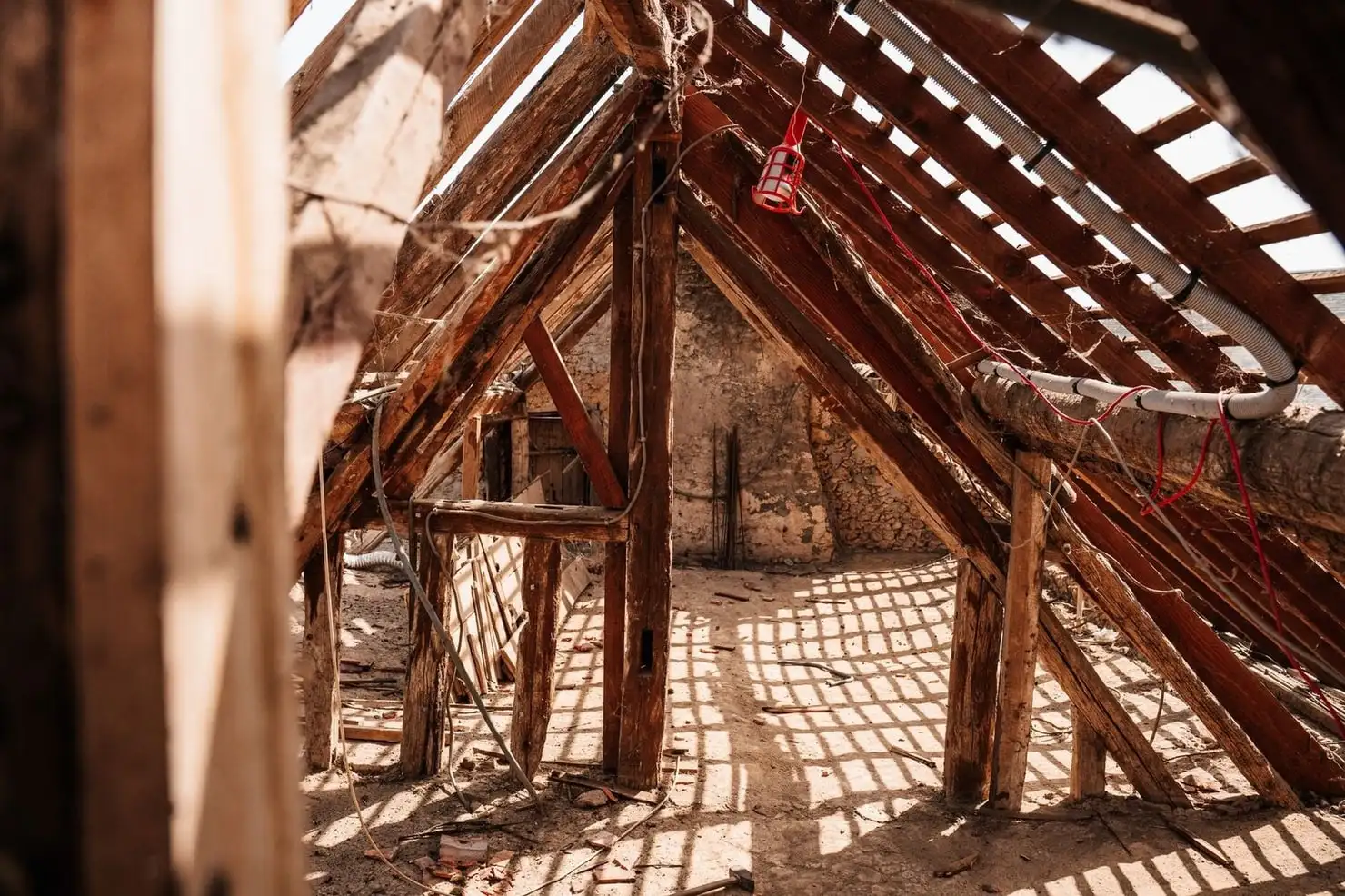
Under the shingles are plywood or OSB sheets nailed to the rafters, and they only fail when water reaches them. On Spring's older roofs the route is usually a vent boot or a flashing that started leaking slowly, feeding the boards for a season or more before a stain showed indoors. Where the oldest subdivisions are now on a third roof, the decking has carried several roofs' worth of nails, and a board softened at an earlier stage may never have been changed. A soft sheet will not hold a nail, so the shingles above lift in the next wind. Roof decking and fascia repair means cutting out the bad sheets to the rafters and fitting new ones.
You can often feel bad decking before you see it: a spongy patch underfoot, a dip visible from the street, or dark staining on the underside of the boards from the attic. The fascia along the eaves rots the same way when gutters overflow against it. It is not optional work, because a new roof laid over soft decking fails early. In Spring, ask whether previous replacements tore off to the decking or laid over the top, since that decides how much of the deck anyone has actually seen. Somebody who works on Spring's older roofs will expect that question. If the cause was an overflowing gutter, Spring gutter repair fixes the source. Describe the soft spot and get matched with an independent roofer in your town.
Photograph any dip in the roofline from the street, and from the attic, if it is safe, look for dark boards or sagging between rafters. Note where a past leak was, because that is usually where the soft sheets are. Ask the contractor how many sheets he expects to replace and how he will let you know if that grows once the shingles are off. On a roof that has been laid over before, ask him to tell you what he finds under the second layer, since nobody has seen those boards for years.
The oldest subdivisions and Old Town buildings are more likely to have boards that have been damp for a long time.
Older Spring subdivisions often have boards that have been damp for years. Ask the contractor to check outward from the stain, not just directly beneath it.
Decking repair in Spring begins with stripping the roofing over the soft area. On an older subdivision roof he checks outward from the stain.
Spring's oldest roofs can have decking that has been damp for years, and in Old Town the boards may be an older material than current sheathing. Ask the contractor what type of decking he found and what he is replacing it with, and whether the new boards meet current standards while fitting the old rafters.
Old Town Spring has buildings more than a hundred years old, and the subdivisions from the 1970s have decking that has carried several roofs. If a contractor finds soft boards, ask whether the rafters beneath them are also affected. Rot in a board is a local problem, but rot in a rafter is structural and belongs in a different conversation.
In Spring the boards on older roofs may be a material that is no longer used. Ask the contractor to say what he found, what he is putting in and how it ties to the surviving boards at the edge of the repair. A good decking repair ends on a rafter with the new sheet properly nailed, so the join does not move.
Decking or fascia work in Spring: none of the 10 listed companies mention it on their own websites, which only means it is not stated. See the Spring page.
Related: roof decking and fascia repair in The Woodlands and roof leak repair in Spring.
Nearby
Also in Spring
Get matched
Tell us what the roof is doing
Tell us what's going on and get matched with an independent roofing contractor working in your town. Free, no obligation.